YouTube Shorts Monetization: Requirements and Payouts
Understand YouTube Shorts monetization through current YPP eligibility, Shorts revenue sharing, RPM in Analytics, and an official-source update checklist.
By the Recapo.ai Editorial Team · Fact-checked July 10, 2026
YouTube Shorts monetization has several distinct layers. Shorts Feed ad and YouTube Premium revenue sharing requires acceptance into the applicable YouTube Partner Program tier and the Shorts Monetization Module. Fan-funding features have their own availability and eligibility, while sponsorships or affiliate programs follow separate agreements and disclosure rules.
This guide separates current eligibility, the Creator Pool mechanism, Shorts RPM in Analytics, outside revenue, and a production test. It does not treat upload frequency as a monetization requirement or promise that a particular cadence will reach a view threshold.
Information note: This is general educational information, not financial advice or an earnings promise. Platform eligibility and payout rules can change; official sources were checked on July 10, 2026.
Official source map: For this Shorts monetization guide, the eligibility, revenue-sharing, and RPM points below are tied to YouTube's Shorts monetization policies, YPP eligibility guidance, YouTube's RPM definition.
Key Takeaways
How YouTube Shorts monetization actually works
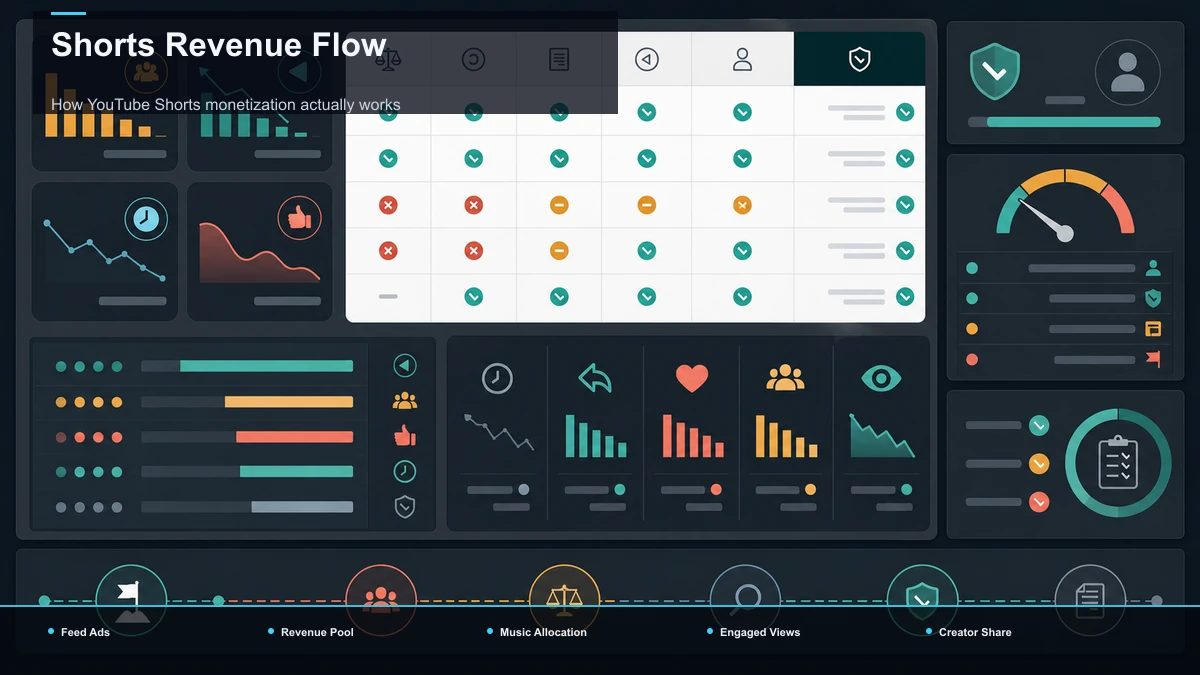
Monetizing partners who have accepted the Shorts Monetization Module can share revenue from eligible ads shown between videos in the Shorts Feed and from allocated YouTube Premium revenue. YouTube pools eligible Shorts Feed ad revenue, accounts for music licensing in the Creator Pool calculation, allocates the pool using eligible engaged views and music usage under the current policy, and then applies the published creator revenue share to each allocation.
As of the fact-check date, YouTube states that creators keep 45% of their allocation. The calculation has additional eligibility rules, including treatment of ineligible engaged views and certain third-party or remixed content, so the percentage alone is not an earnings forecast. Check the current Shorts monetization policy and the channel's own Analytics before modeling revenue.
YouTube Partner Program requirements: verify the current route
At the July 10, 2026 fact check, YouTube's full ad-revenue tier showed a subscriber requirement plus either a long-form public-watch-hour route or a Shorts engaged-view route. YouTube also describes earlier access to selected fan-funding and shopping features in eligible regions under lower thresholds.
| Long-form public watch time | 1,000 | 4,000 valid public watch hours | Rolling 12 months | Shorts | 1,000 | 10 million valid public Shorts engaged views | Rolling 90 days |
These values are a dated snapshot, not permanent constants. Availability, definitions, modules, review, regional rollout, policy compliance, and account status still matter, and meeting a numeric threshold does not guarantee approval. Confirm the Earn tab and YouTube's official eligibility page before making a business decision.
How much do YouTube Shorts pay? Understanding Shorts RPM
There is no reliable universal payment per Shorts view. YouTube defines Shorts RPM per 1,000 engaged views, and the reported result can change with eligible revenue, audience geography, season, policy status, and the channel's actual revenue mix.
Use the estimated Shorts revenue shown in YouTube Analytics. As a cross-check, divide engaged views by 1,000 and multiply by the Shorts RPM reported for the same scope and period. Do not substitute the newer public view count for engaged views, and do not combine a generic RPM estimate with channel data as though it were an observed rate.
Public creator anecdotes and third-party ranges can provide questions to investigate, but they are not a rate card or forecast for another account.
Why eligibility is not a publishing-frequency formula
The Shorts route to YPP uses the current subscriber and eligible engaged-view thresholds shown by YouTube. It does not require a fixed number of uploads or one to two posts per day. The number of Shorts needed cannot be inferred without the account's actual engaged-view distribution.
Choose a cadence that preserves originality, rights review, caption accuracy, and useful variation between videos. Track approved uploads and eligible engaged views over the same rolling window, but treat the result as account evidence rather than proof that frequency caused the outcome.
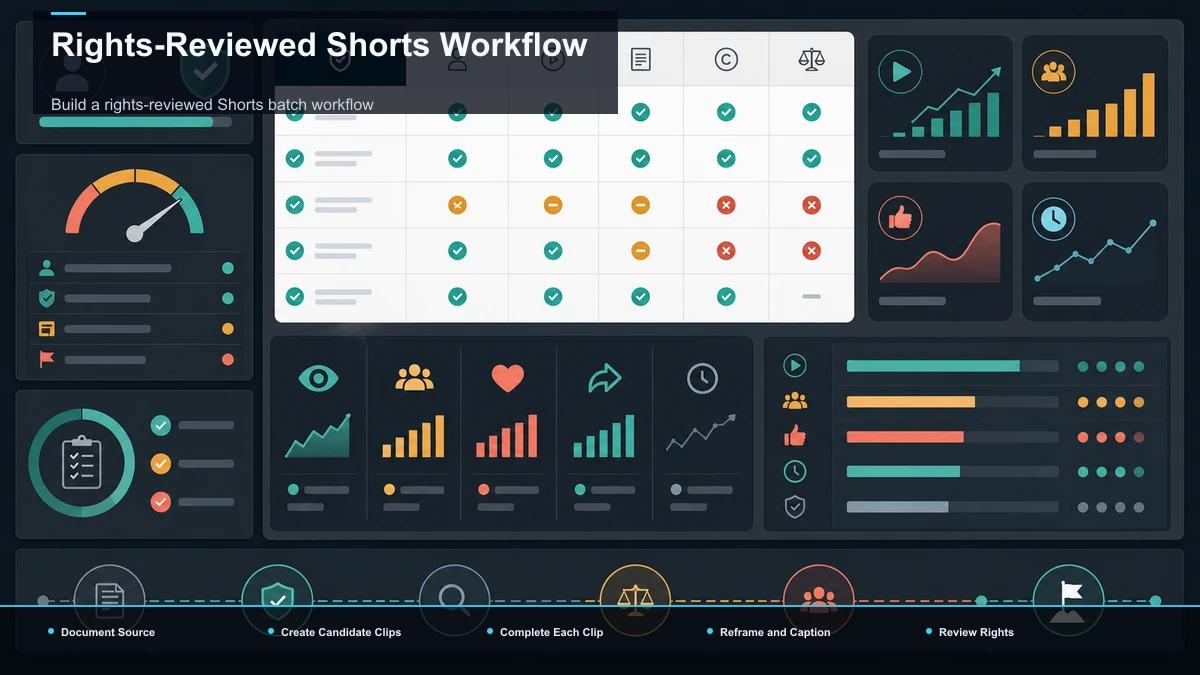
Build a rights-reviewed Shorts batch workflow
Repurposing can reduce repeated setup work when the source is yours or you otherwise have a documented basis to use it. It does not create rights to third-party footage or guarantee a usable number of clips.
- Document the source. Record ownership, permission or license, contributors, music, and any restrictions before editing.
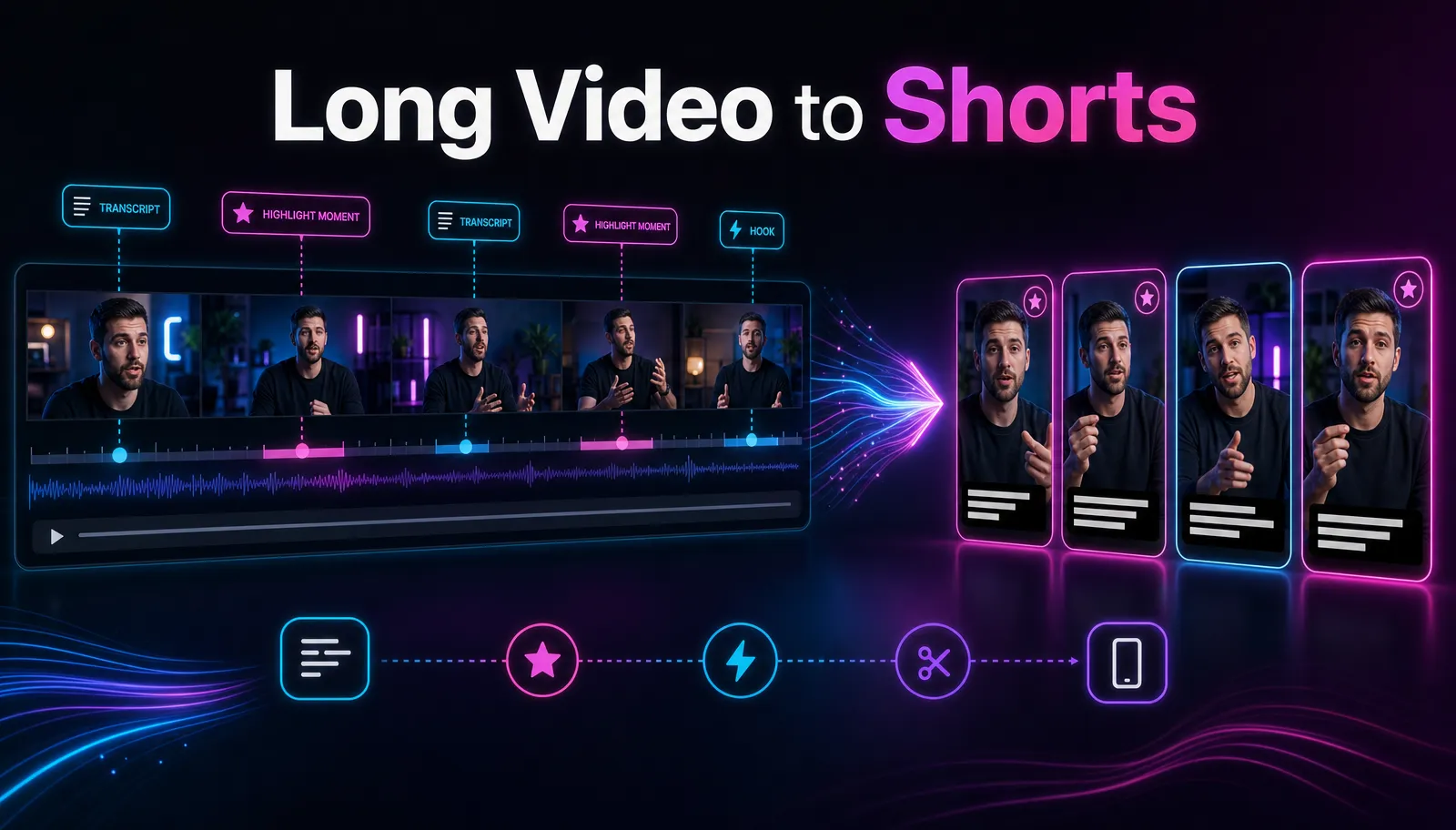
- Create candidate clips. Use a long-video-to-short-video tool or manual review to surface self-contained moments; keep human approval over every selection.
- Make each clip complete. Give it a clear premise and payoff rather than publishing a fragment solely to increase volume.
- Reframe and caption. Review the 9:16 crop, generate captions, and correct names, figures, and specialist terms.
- Review policy and rights. Check originality, reused-content concerns, disclosures, and any matched material before approval.
- Measure keeper yield. Record candidates, approved clips, revision time, and cost per approved Short. Use that evidence to set a sustainable cadence.
Recapo can support clipping, reframing, captions, cover, and export in one browser workflow; processing and rendering run in the cloud. The editor does not control YPP approval, engaged views, or revenue.
Model revenue streams separately
Shorts Feed ads and YouTube Premium revenue are governed by YPP and the Shorts Monetization Module. Memberships and fan-funding features depend on current YouTube availability and eligibility. Sponsorships, affiliate programs, and external products operate under their own agreements, demand, fulfillment costs, refunds, taxes, and disclosure rules.
Do not assume an outside revenue stream is available or profitable before there is a valid program, contract, product margin, and audience response. Keep each source in a separate scenario so YouTube RPM is not double-counted with revenue it already includes.
Pressure-test the plan with account evidence
Run one representative, rights-reviewed source through the workflow and record:
- Keeper yield: candidate clips versus clips that pass editorial and rights review.
- Time and cost: source review, editing, caption correction, approval, and publishing work per approved Short.
- Platform evidence: eligible engaged views, Shorts RPM, reported revenue, and monetization status from the same period.
- Outside revenue evidence: only signed sponsorships, qualified affiliate results, or actual product contribution after costs.
- Sustainable cadence: the number of distinct, reviewed Shorts the team can maintain without lowering standards.
Use low, base, and high scenarios while data is limited, and label every assumption. Production efficiency can reduce cost; it cannot promise YPP approval, reach, or income.
FAQ
What are the requirements to monetize YouTube Shorts? The channel must meet the applicable YPP requirements and accept the relevant monetization terms. Thresholds, features, and regional availability can change, so use YouTube's current eligibility and Shorts monetization pages.
How much do YouTube Shorts pay per view? YouTube does not publish one universal per-view payment. Review estimated Shorts revenue and RPM per 1,000 engaged views in your own Analytics for a consistent period.
Do Shorts views count toward long-form public watch hours? The eligibility page separates the long-form watch-hour path from the Shorts engaged-view path. Confirm the current definitions in Studio and official help before planning around either route.
How many Shorts do I need to post? There is no post-count requirement. The number needed cannot be predicted without actual engaged views, and more uploads do not guarantee eligibility.
Can AI-assisted Shorts be monetized? Tool use alone does not decide eligibility. YouTube reviews channel monetization policies, including originality and reused or inauthentic content, while copyright and disclosure rules still apply. Keep human editorial review and source records.
Test one source and document the result
Start with a long video you are entitled to use, create a small batch of distinct candidates, and record keeper yield, correction time, eligible engaged views, monetization status, and reported revenue at a fixed observation point. Create a free Recapo account to test clipping, vertical framing, captions, cover, and export in one browser workflow. The result is production evidence, not an earnings promise.
References and official sources