Best AI Movie Recap Tools (2026 Comparison)
The best AI movie recap tools in 2026, compared stage by stage with copyright risk first — plus a same-film self-test so your footage picks the tool.
By the Recapo.ai Editorial Team · Fact-checked July 10, 2026
AI movie-recap tools cover different stages: outlining, script drafting, narration, clipping, captions, visual assembly, and export. No tool can make copyrighted footage safe to use, prevent Content ID matches, or guarantee monetization. This guide compares workflow fit from public product information, starts with a copyright-aware review, and uses the same authorized source segment for every self-test.
Disclosure and method: Recapo.ai publishes this guide and may appear among the tools discussed. We checked official product pages on July 10, 2026. This edition is a desk-research comparison, not a standardized hands-on benchmark. We compare stated workflow fit rather than unverified performance scores and recommend testing the same source file in each finalist. Features, limits, and pricing can change.
Copyright comes first, before any feature
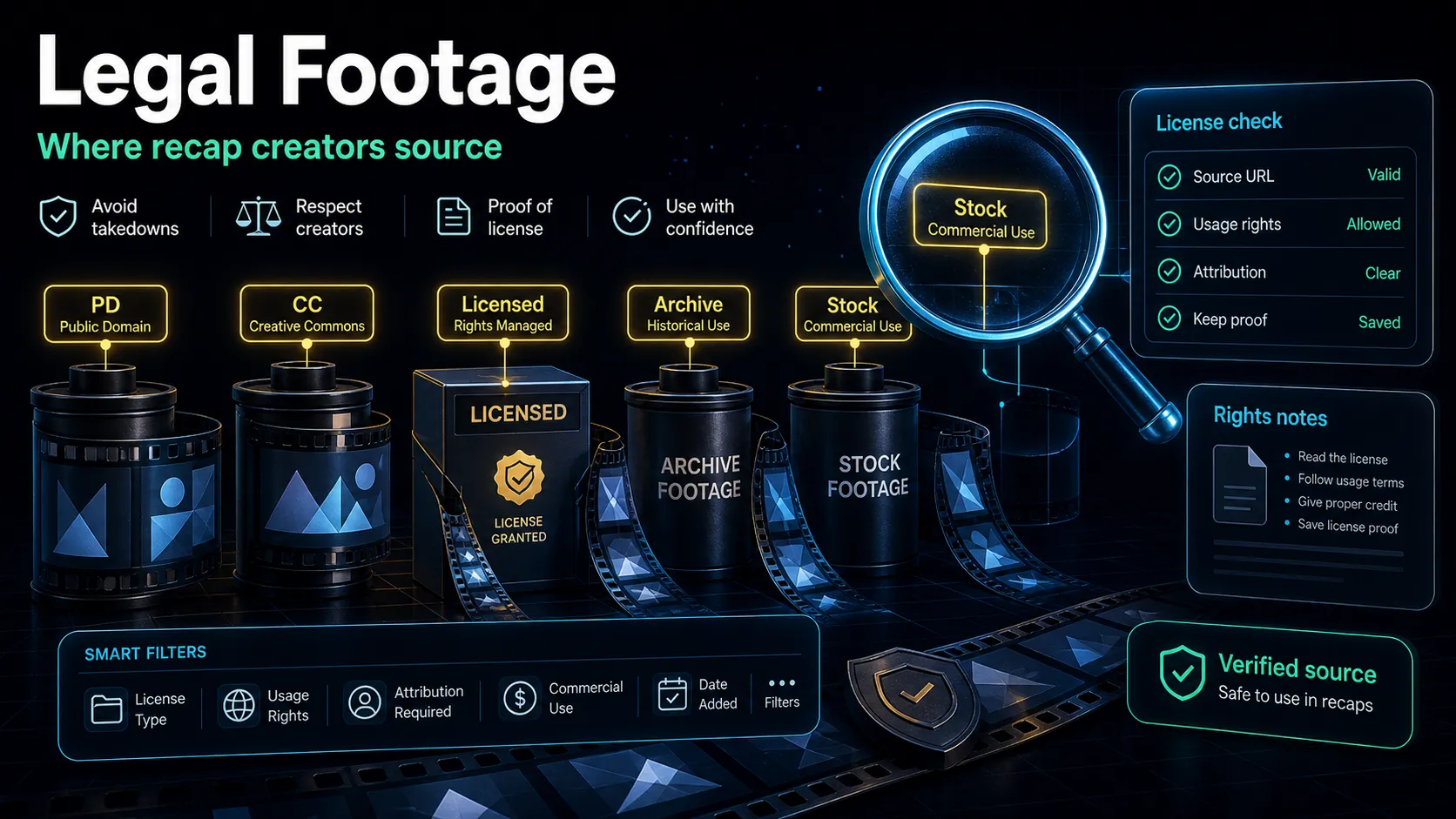
Movie footage, dialogue, music, posters, and promotional assets can carry separate rights. In the United States, fair use is evaluated case by case across four factors: purpose and character, nature of the work, amount and substantiality, and market effect. Other jurisdictions apply different rules. A tool cannot decide that analysis for you.
YouTube's Content ID is also separate from the legal test. It can match audio or video and apply a rights holder's monetize, block, or track policy even when a creator believes the use is defensible. A copyright strike follows a valid legal removal request, not the automated match alone.
For a tool comparison, use footage you own or are licensed to test. Evaluate whether the tool preserves editorial control, lets you review every excerpt, keeps scripts and captions editable, and records the source used. Obtain qualified advice when a commercial use is uncertain; this guide is general information, not legal advice.
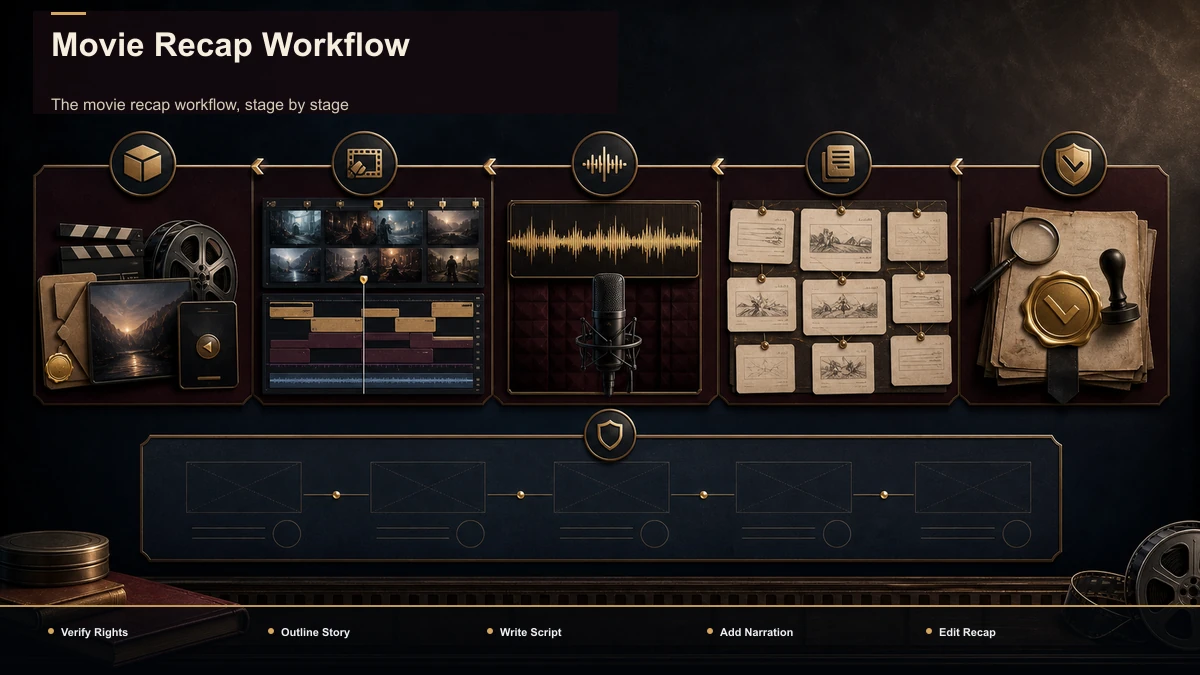
The movie recap workflow, stage by stage
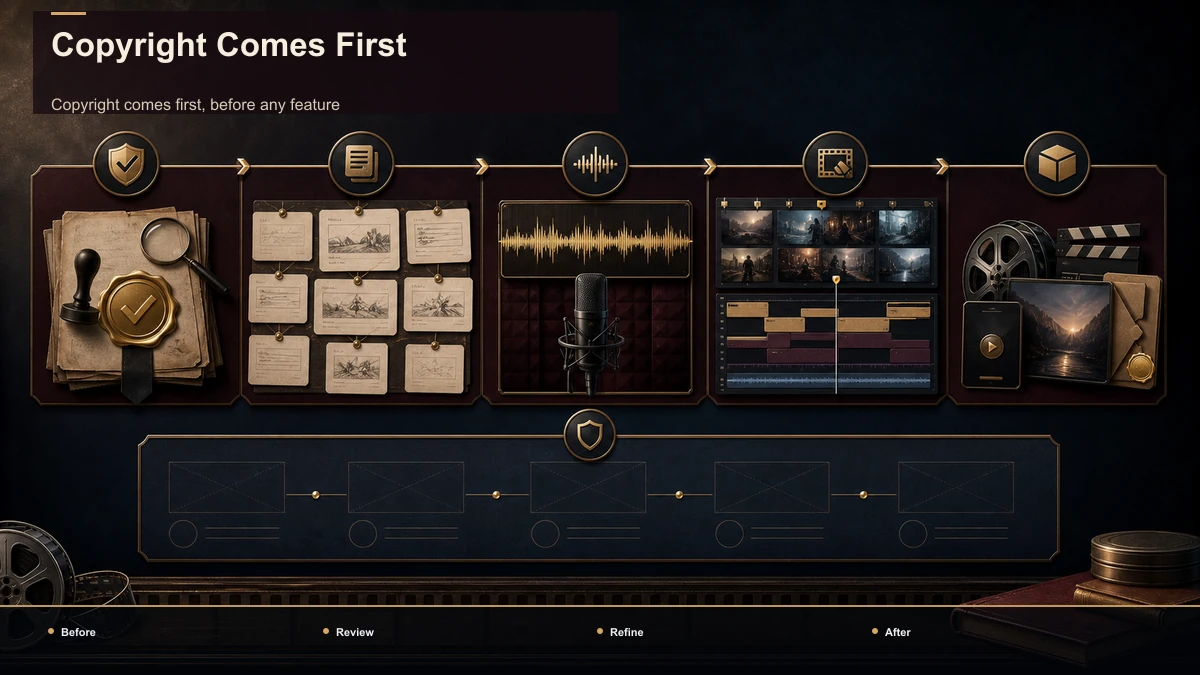
A finished recap isn't one task; it's five, and every "best AI tools for movie recaps" debate is really an argument about which stage matters most to you. Map your own weak spot before you shop.
| Stage | What it produces | What "good" looks like |
|---|---|---|
| Script | A tight recap narration with a hook and a clear arc | Reads as your voice and analysis, not a plot dump |
| Voiceover | A natural narration track from the script | Consistent tone, correct pacing, right character and place names |
| Footage editing | Trimmed, sequenced clips under the narration | Fast to trim, easy to sync visuals to script beats |
| Captions | Burned-in subtitles for muted viewing | Accurate on names and jargon, styled for retention |
| Cover & export | Thumbnail plus the right file for each platform | Clean vertical or horizontal export, click-worthy cover |
Two honest notes. First, the script and the edit — not the AI voice — are where most recaps win or lose their audience; a great voice reading a generic summary is still a generic recap. Second, no single stage tool is "the best AI movie recap generator," because a strong voiceover tool can sit next to a weak editor. Judge the chain, not one link.
What the popular movie recap AI tools are known for
Here's the field at the level that stays true over time — public positioning, not this quarter's feature list or pricing. Directories like TAAFT and Toolify will list dozens more; treat those as catalogs, not endorsements.
| Tool | Publicly known as | Where it tends to fit |
|---|---|---|
| RecapGen | A purpose-built movie recap generator | Creators who want a recap-specific pipeline |
| Video Recap AI | An AI tool focused on turning films into recap videos | One-shot "film in, recap out" attempts |
| FlexClip | A browser-based, template-driven online video editor | General editing and assembly, not recap-specific |
| ImagineArt | A generative AI media tool (images and video from prompts) | Creating original or stylized visuals, not editing film footage |
Everything below that positioning line — output length, styles, free-tier limits, watermark rules, export ceilings — moves too often to trust from a screenshot; that's what the self-test is for. And these four aren't even the same kind of product, so a single feature grid can't compare them fairly — a stage-by-stage frame can.
Compare by stage, not by a feature checklist
Different products cover different jobs: outlining, narration, clipping, captioning, generated visuals, or full video assembly. Compare only the stages you need and keep legal or platform conclusions outside the product score.
| Dimension | What to inspect | Same-source test |
|---|---|---|
| Source record | Can you identify and retain the input used? | Save the source, license or permission, and project record |
| Script grounding | Can claims be traced to the authorized source? | Check names, events, chronology, and invented details |
| Editorial control | Can you edit every script line and excerpt? | Change the angle, order, boundaries, and commentary |
| Narration review | Can you correct pronunciation, pacing, and terms? | Render the same script and log corrections |
| Caption and frame review | Can you fix text, timing, and vertical composition? | Count corrections on one exported segment |
| Export and terms | Does the current plan support the required output and use? | Export a real file and read current license and pricing terms |
A high score means the workflow is reviewable and fits your production job. It is not a legal opinion, a monetization guarantee, or evidence that another tool is unsafe.
Run the same-film self-test (~25 minutes)
Reviews go stale the moment prices and features change; a test on your own material doesn't. Use one short segment you have the right to use — a trailer you're commenting on, licensed footage, or your own clips — and push it through each candidate identically.
- Pick one real segment and topic. Two to three minutes of footage you're cleared to use, plus the film or episode you'd actually cover.
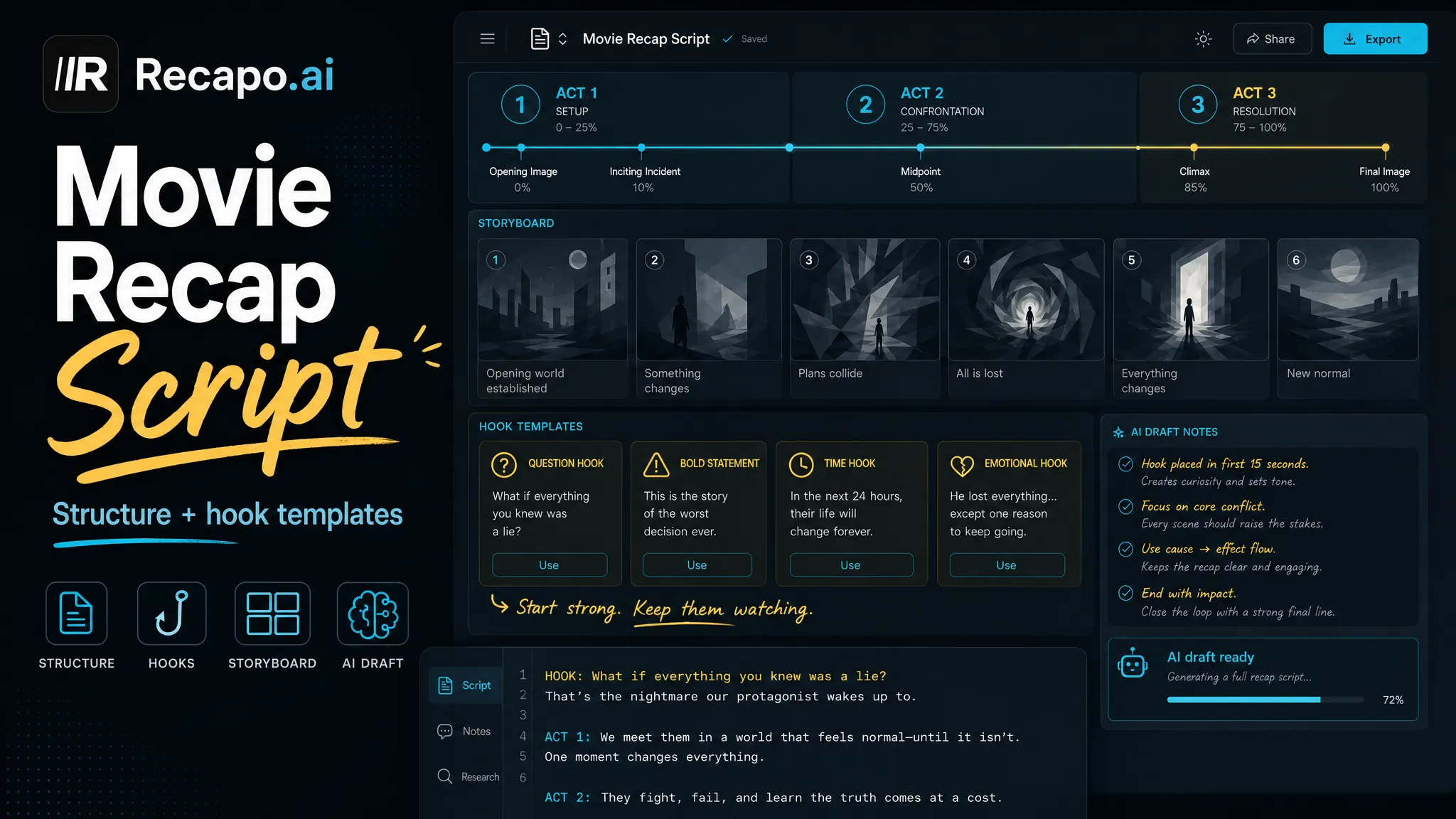
- Generate the script. Draft your recap narration and tighten the hook. In Recapo you can turn a plot into a working outline with the plot summary generator, then rewrite it in your own voice. That strengthens originality and editorial control, but no single rewrite step determines fair use or platform eligibility. Our guide on how to write a movie recap script shows the structure that keeps viewers watching.
- Produce the voiceover. Turn the finished script into a narration track with the voiceover maker, then judge it honestly on speakers: does it stumble on character names, or read like a person?
- Edit the footage. Trim your clips, sequence them under the narration, and add captions and a cover. Recapo handles this end of the chain in the AI video editor; note how much manual fixing each tool needs after its automatic pass.
- Caption and reframe. Burn in captions, proofread the names, and reframe to vertical for Shorts, Reels, and TikTok. Watch on a phone with the sound off.
- Export and inspect. Export a real file and open it the way your audience will.
- Score and total. Rate each tool 1–5 on originality control, script, voiceover, editing, and export fit, and add a column for how it bills at your real monthly volume — read that off each pricing page, don't guess.
The winner isn't the flashiest demo; it's the tool that got your real segment to a publishable, transformative recap with the least cleanup.
Where Recapo fits as an end-to-end recap workflow
Most tools in this space own one stage. Recapo is worth a look for the opposite reason: it's a browser-based workspace, with no install, that covers the connected middle of the recap chain in one place — so you steer the whole thing in one tab instead of exporting between four apps.
What it does, honestly and within its lane:
- Summaries and scripts to draft and structure your recap.
- AI voiceover for the narration track.
- Transcribe and caption so the video works muted.
- Turn long videos into short clips for cross-posting.
- Resize and vertical reframing so one recap feeds every feed.
- Cover and export to finish end to end.
It accepts MP4, MOV, and other common formats, handles up to 6GB total per task, and keeps plans on the pricing page so you can match billing to your volume. Being honest about the boundary: Recapo doesn't hand you movie footage, and it isn't a one-click "type a title, get a finished recap" machine — you bring footage you're cleared to use and your own commentary, and it helps you script, voice, cut, caption, and export around them. For a creator who treats recaps as a recurring operation, that end-to-end control is the point: it keeps the script, excerpts, captions, and export available for review. Put it through the same self-test above and let your footage decide.
Movie recap tool decision grid
| Primary need | Category to test |
|---|---|
| Outline and script draft | A source-grounded summarization or script tool |
| Standalone narration files | A specialist voice tool with suitable terms |
| Clip, caption, frame, and export | A video editor or repurposing workspace |
| Original or stylized visual assets | A media-generation tool with reviewed licenses and outputs |
| Complete production flow | A workspace that keeps each stage editable and reviewable |
| Rights or legal conclusion | A qualified professional, not an editing tool |
Shortlist by the job, then run the same authorized source through every finalist.
FAQ
What is the best AI tool for movie recaps? There is no universal winner. Choose the stage you need, confirm current product and license terms, and compare finalists on the same authorized source.
Is there a free movie recap AI? Some products offer free access, but limits and commercial terms change. Check the current plan, export a real file, and confirm whether the inputs and outputs fit your intended use.
Can AI make a complete movie recap automatically? Some tools can draft multiple stages, but every factual claim, script line, excerpt, asset, caption, and export still needs review. Automation does not grant source rights or decide platform eligibility.
Will an AI movie recap be monetized? No tool can promise that. YouTube eligibility, channel review, reused-content and other policies, advertiser suitability, and video-level claims all matter. Check the current official rules and the actual video's status.
What is the difference between a recap generator and an editor? A generator aims to draft more of the output from limited input; an editor gives you direct control over existing material. Compare how much evidence, editability, and final review each workflow preserves.
Start with an authorized test segment
Choose one segment you are entitled to use, define the output you need, and run it through each finalist with the same checklist. Create a free Recapo account to test an editable script-to-export workflow in the browser. Record source rights, corrections, plan requirements, and final output; the tool does not make the legal or monetization decision for you.
References and official sources
- YouTube: Copyright and fair use
- YouTube Help: How Content ID works
- U.S. Copyright Office: Fair Use Index
- 17 U.S. Code § 107 — Fair use
- Recapo.ai: Product overview and current upload limits
- Recapo.ai: AI Video Editor
- Pictory: Official product page
- InVideo: Official product page
- Fliki: Official product page