YouTube SEO Guide: An Evidence-Based Workflow
Use a YouTube SEO workflow grounded in viewer intent, accurate metadata, reviewed captions, useful structure, and evidence from your own Analytics.
By the Recapo.ai Editorial Team · Fact-checked July 10, 2026
YouTube does not publish a simple SEO formula or a fixed weighting for titles, descriptions, captions, click-through rate, watch time, or any other signal. Its official guidance emphasizes helping the right viewers find and choose relevant videos, then satisfying those viewers. That makes clear packaging, accurate context, accessible captions, and a useful video sensible practices, not guaranteed ranking levers.
This guide focuses on work you can document before and after upload: research viewer language, write accurate metadata, provide reviewed captions, add useful structure, and validate results in your own YouTube Analytics.
Fact-check note: Platform rules and product limits were checked against official sources on July 10, 2026. They can change, so verify the linked source before acting on a threshold or specification.
Official source map: For this YouTube SEO workflow, the discovery, Analytics, and chaptering points below are tied to YouTube discovery guidance, YouTube Analytics documentation, YouTube's video chapters guidance.
Key Takeaways
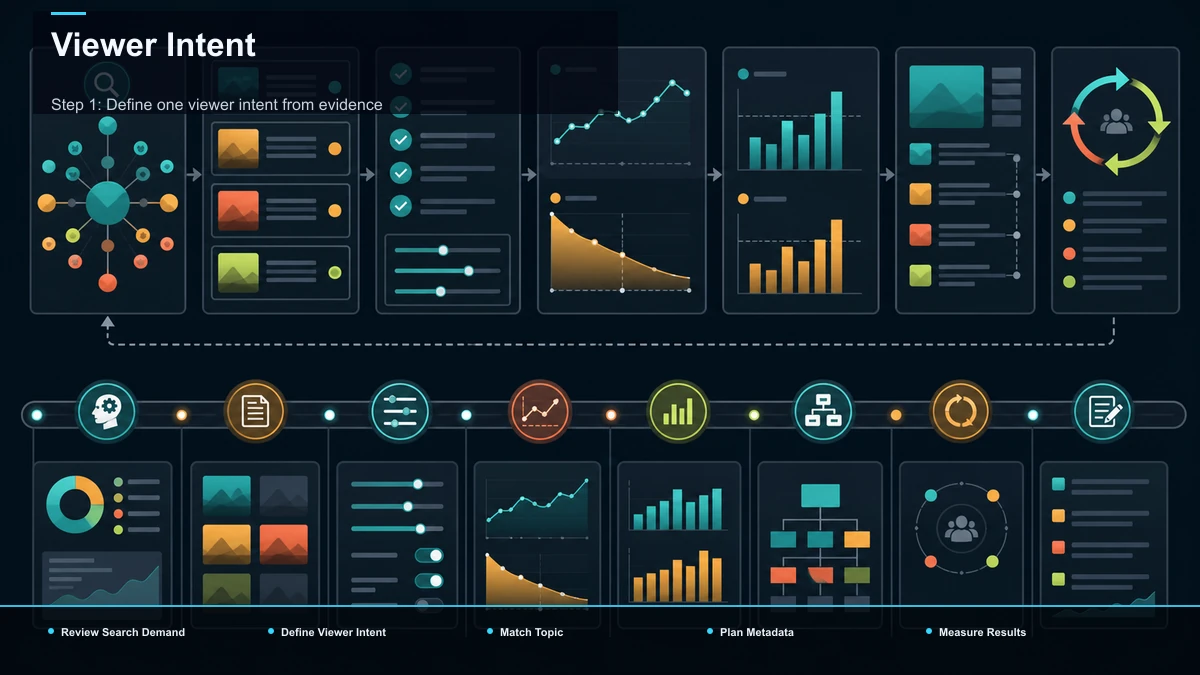
What you can control and measure
| Topic and intent | The question the video answers | Search terms and audience comments | Packaging | Accurate title and thumbnail | Impressions and click-through rate in context | Context | Description, captions, chapters, links | Accuracy, accessibility, navigation | Viewer experience | Hook, pacing, evidence, payoff | Retention patterns and satisfaction signals available to you | Distribution paths | Playlists, related videos, Shorts, external links | Traffic sources and downstream viewing |
These are editorial and measurement areas, not a claim that each row has a fixed algorithm weight. YouTube's systems and reporting evolve, so use official documentation and your own account data.
Step 1: Define one viewer intent from evidence
Start with evidence available to your channel: search terms in YouTube Analytics when reported, recurring audience questions, comments, support or sales conversations, and the language used in relevant platform suggestions. Suggestions are idea prompts; they do not, by themselves, prove search volume, competition, or ranking potential.
Choose one primary viewer question that the video genuinely answers. Record the phrase, where you found it, and the date, then write the promised answer in one sentence. Related wording can support clarity, but there is no evidence-based keyword-density target to hit.
Step 2: Write an accurate title and useful description
The title should identify the topic and differentiating promise without overstating what the video delivers. Put the clearest information early so it remains understandable when interfaces truncate the title; this is a display and clarity practice, not a guaranteed ranking technique. Check the current field limit in YouTube Studio rather than relying on an old number in a blog.
Open the description with a concise summary of what the viewer will learn or see. Add chapters, source links, disclosures, and related resources only when they help. Use natural language and avoid repeated phrases written solely for an assumed algorithm.
Step 3: Provide accurate captions
Captions improve accessibility and help viewers follow names, jargon, accents, and numbers. YouTube can generate automatic captions, but a reviewed track is more reliable for the audience and for any downstream reuse of the transcript.
Generate a draft, correct names and specialist terms, check timing, and upload the reviewed file in a supported format. YouTube does not publish a simple ranking weight for caption text, so treat accurate captions as an accessibility and quality requirement rather than a guaranteed SEO boost.
Step 4: Add useful chapters and review the edit
Video chapters can add context and make sections easier to revisit. For manual chapters, follow YouTube's current timestamp requirements and use labels that accurately describe each section. Not every video needs chapters, and YouTube does not publish a fixed SEO gain for adding them.
Review the edit for a clear opening, evidence in the right place, and a payoff that matches the title and thumbnail. Removing repetition can improve the viewing experience, but do not describe an editing choice as a direct ranking factor unless YouTube documents it as one.
Step 5: Evaluate viewer response in context
An accurate title and thumbnail help a viewer decide whether the video is relevant. The video then needs to deliver that promise. Review click-through rate together with impressions and traffic source, and review retention together with topic, format, and audience. A high or low value without context is not a universal verdict.
Use playlists, end screens, related videos, and Shorts when they genuinely help a viewer continue. Track the resulting traffic and downstream viewing in Analytics. Do not describe one tactic as a guaranteed ranking factor or multiply uploads simply to create more "chances."
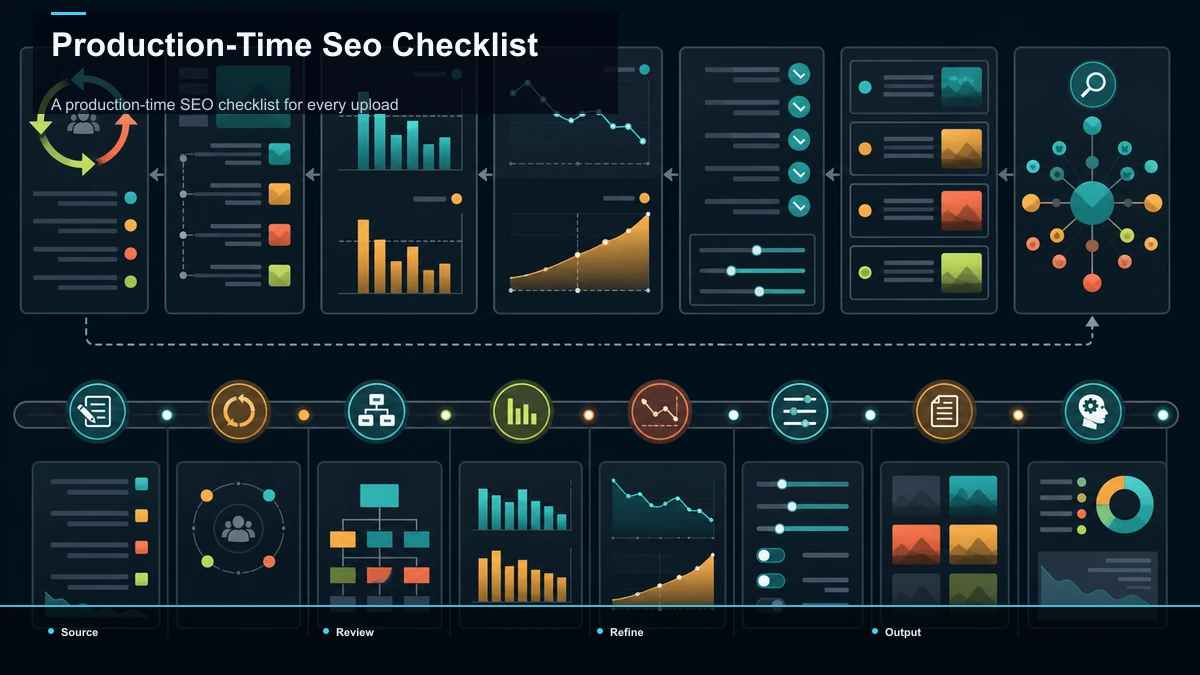
A production-time SEO checklist for every upload
- Intent documented. One viewer question, plus the source and date that informed it.
- Promise aligned. Title, thumbnail, opening, and payoff describe the same video.
- Metadata accurate. The title and description use natural language without unsupported claims or repetition.
- Captions reviewed. Names, figures, specialist terms, and timing have been checked.
- Structure useful. Chapters are added only when they improve navigation and meet current platform requirements.
- Sources and rights checked. Claims, quotations, visuals, music, and disclosures have a documented basis.
- Measurement window set. Decide when to review impressions, traffic sources, click-through rate, retention, and search terms.
- Test log ready. Change one meaningful packaging or content variable at a time and record the result against the channel baseline.
This checklist improves consistency and evidence quality. It does not guarantee search placement or recommendations.
FAQ
How do I rank a YouTube video faster? There is no guaranteed timetable. Improve topic fit, packaging, accuracy, accessibility, and viewer value, then use Analytics to understand how the video is being discovered and watched.
Do tags matter for YouTube SEO? YouTube says tags can be useful for common misspellings but otherwise play a minimal role in discovery. Prioritize an accurate title, thumbnail, description, and video.
Do captions help YouTube SEO? Captions clearly improve accessibility and comprehension. YouTube does not publish a fixed ranking weight for caption text, so avoid promising a direct ranking gain. Upload a corrected track because it helps viewers and creates a reliable transcript.
How long should a YouTube title be? There is no ideal word count. Put the clearest differentiating information early, stay within YouTube's current character limit, and check how the title appears on the surfaces that matter to your audience.
Can AI tools do YouTube SEO for me? They can assist with transcripts, editing, summaries, and clip production. They cannot choose the right audience promise, verify every fact, guarantee recommendations, or replace your review of Analytics.
Apply the framework to the next upload
Choose one viewer question, align the title and thumbnail with the answer, provide accurate captions and useful chapters, then review the traffic and viewer-response data in YouTube Studio. Create a free Recapo account to prepare captions, tighten the edit, and create a related Short in one browser workflow. Processing and rendering run in the cloud; no editing tool controls YouTube's ranking systems.
References and official sources